– We’re Just Getting Started –
Halo took the world by storm, captivating nearly everyone who picked up a controller. It wasn’t just a fun game, it was a gold standard for what video games could be. More than that, it was a universe, rich with lore and imagination, waiting to be explored across books, games, comics, and more.
Being the age I am, I was only four when I first played Halo: Combat Evolved on the original Xbox. I couldn’t have known then that this game would spark a lifelong love for the franchise. And with love comes the potential to be disappointed.
I remember when Halo 2 came out. I wanted it so badly. When Christmas came and I didn’t find it under the tree, I felt crushed. I even looked through the branches, hoping Santa had just hidden it. There was something magnetic about the world of Halo, about this green-armoured supersoldier. I wanted to know everything about it.
When Halo 3 rolled around, I finally got to play on launch day. It was the first time I had ever played online, and Xbox Live felt like stepping into another dimension. Playing with people from around the world blew my mind.
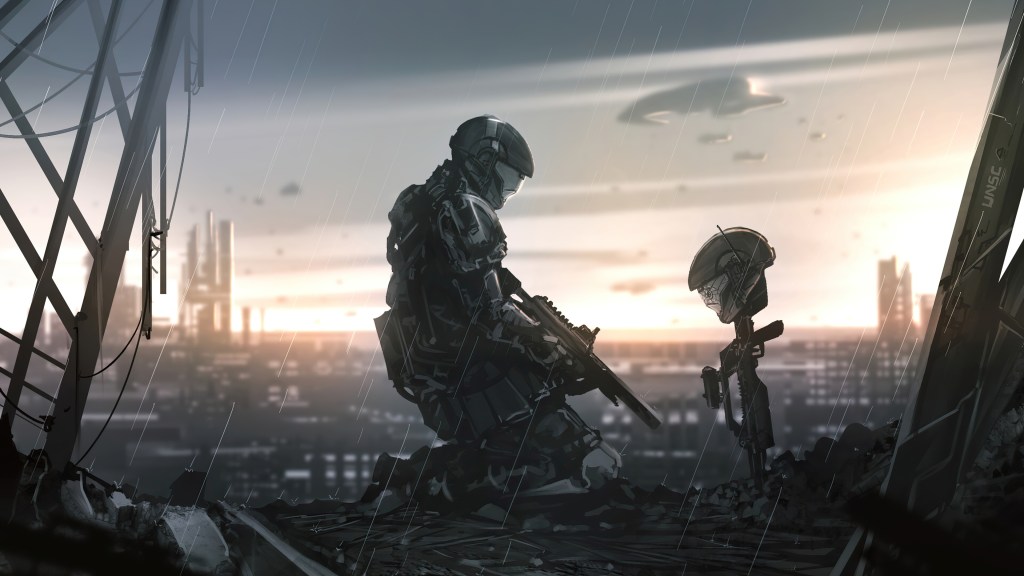
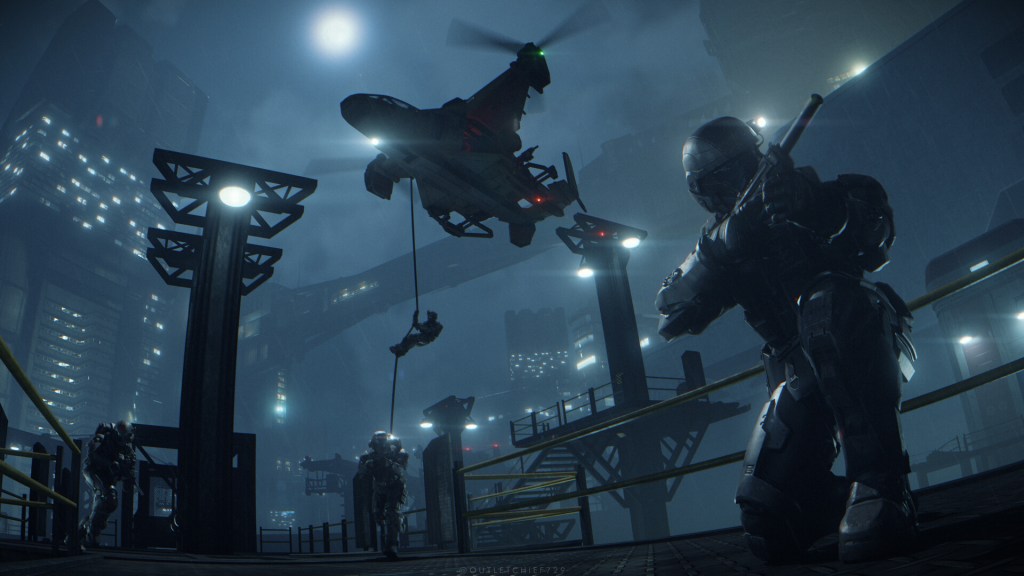
Then came Halo 3: ODST, and I fell in love with the series all over again. It was a fresh perspective, playing not as a Spartan but as an ODST, a special forces soldier with no super strength and no AI whispering in my ear. The story took place on Earth, in rain-soaked city streets and shadowy underground tunnels. Suddenly, you weren’t a god. You had to think before every fight. You didn’t have recharging shields. It was slower, more deliberate. And I assumed ODST-style games would become a recurring side series to Halo’s mainline titles.
Little did I know that, behind the scenes, Bungie was preparing to part ways with Microsoft to start something new. Their final Halo entry, Halo: Reach, was a masterclass in design. It refined the systems from the earlier games, introduced even deeper customisation, and delivered a heartbreaking story set just before we first meet Master Chief in Halo: Combat Evolved. It wasn’t perfect. It rewrote some of the lore from the novel The Fall of Reach, which stung, but it was still an incredible game. And yet, something shifted after that.
Halo, once a shining example of what developers should strive for, slowly became a cautionary tale of what they should avoid.
So what went wrong, and when?
Ask long-time fans and you’ll get different answers. Some say it was the introduction of armour abilities in Reach. Others blame Halo 4 for chasing Call of Duty rather than competing with it. Everyone has their own moment when Halo stopped feeling like Halo.
But the truth is more complicated. To understand where things fell apart, we need to look at Halo as a structure held together by six essential pillars. These pillars supported the identity of the franchise, and over time, each one cracked.
The six pillars are:
1. Gameplay
2. Visual Style
3. Sound Design
4. Setting
5. Community
6. Fun
Each of these broke in different ways, and the game has never quite felt the same since.
– When Gods Fall Silent –
Many long-term fans will agree that Bungie was Halo. They understood it inside and out. They knew what they wanted to make, and nothing could change that. So when 343 Industries (now Halo Studios) took over, the ideas changed. The direction was lost. What was once a promising plan to continue the Halo legacy turned into twelve years… twelve long years. That’s how long it took us to get Halo back.
At first, it seemed like things were going well. But then came setback after setback. Loss after loss. What should have been a big and promising win turned into twelve years of hell.
Of course, that’s all Halo is today. Hell, down there.
But now it’s ours again.
Sound familiar? It should. That was my version of the intro speech from Halo Wars 1, a speech I’ve always wondered about. Did it accidentally predict Halo’s downfall?
So why didn’t I mention Halo Wars in my first section? Because Halo Wars 1 wasn’t made by Bungie. It was aided by them, sure, but they were never thrilled about the plan. I think it deserves a post of its own.
So… which pillar cracked first?
– Pillar 1: Gameplay –
Halo 4 had a lot wrong with it, but the most notable issue was the gameplay. Sprint became standard. Armour abilities went from being simple to forming full class loadouts. Loadouts themselves became customisable, and while that sounds like a great addition at first, it went against what made Halo’s multiplayer unique. Originally, players started with basic weapons and fought over better ones placed around the map. Control of those locations mattered. You earned your power.
“But didn’t Halo 4 still have power weapons on the map?” Yes, it did. But you could also start the match with a Light Rifle once you unlocked it, giving you an edge over anyone still stuck with the Assault Rifle. The core loop was broken. That sense of fighting for map control was undermined.
All that said, Halo 4 wasn’t a bad game, it just wasn’t Halo. During its lifecycle, my friends and I drifted back to Halo: Reach. We preferred it. I hit max rank in Halo 4 pretty quickly and unlocked all the armour, so I had no reason to keep playing. Compared to the classics, the gameplay felt like a downgrade. Movement was stiff, animations were basic, and the weapons lacked the satisfying punch we were used to.
Halo 5 didn’t help. It pushed further into that Call of Duty-inspired direction. It tried to be something else. Halo Infinite attempted to repair that damage, and I’ll go as far as to say it made a real effort. It started to feel like Halo again, not completely but it was a step in the right direction.
Leaks and developer commentary suggested 343 wanted to make Halo into a hero shooter at one point, chasing trends instead of leading them. If that had happened, it would’ve been the final nail in the coffin. Thankfully, they pulled back. Still, the Slipspace Engine they were building on caused issues, and the infamous 2020 gameplay reveal, with its unpolished visuals and clean, plastic-looking textures, pushed the game back by a year.
I believe Halo Studios can still pull Halo from the jaws of hell. They need to expand its scope and embrace its identity. I do have concerns though, especially with the new head of Halo Studios being publicly against guns. But as someone who worked as a chef for years and cooked great vegan food despite hating it, I can tell you: you don’t have to love something to make it great. You just have to understand it’s not for you.

– Pillar 2: Visual Style –
It’s been well documented how Halo’s visual style changed under 343, and how disliked that shift was, especially by players who grew up with the Bungie era. That issue first reared its head in Halo 4. The very first trailer showed Chief walking through the wreckage of Forward Unto Dawn, and already his armour looked drastically different. It was bulky, overdesigned, and mechanical in ways that didn’t feel grounded.
That was the first red flag. If this was the new visual direction, fans were not going to be happy, and we weren’t.
Now, that’s not to say no one liked it. There were fans who enjoyed the changes. But they were the minority. Master Chief’s sleek, functional armour was replaced with jagged panels that looked more like they belonged in Gears of War or Mad Max than in Halo. It didn’t stop there. Those design decisions carried over into multiplayer. The Spartan armour in Halo 4 looked downright bizarre. The only one I remember liking was the ODST armour DLC, and even that was one of the worst attempts at ODST gear I’d seen.
The problem wasn’t just the look, it was the reasoning. 343 wanted to take Halo in “their own direction.” I can understand that desire when you’re starting fresh, but Halo wasn’t a clean slate. It was a living universe with an iconic identity. You don’t repaint the Mona Lisa in your own palette just because you can.
In Bungie’s Halo, the visuals felt grounded. Humanity’s tech looked real and beat-up. It felt like a modern war set in the far future, with the Covenant’s alien tech adding contrast. That balance was lost. Halo 4 felt more like a fantasy game than a grounded sci-fi shooter.
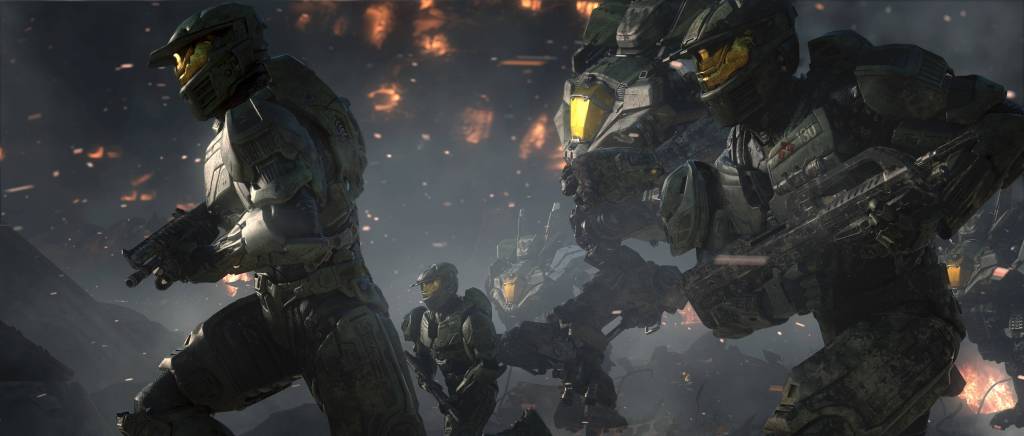
Ironically, one of the best visual interpretations of Halo came from Halo Wars 1. It wasn’t made by Bungie, but it looked like Bungie made it. The gameplay visuals resembled Halo 3, and the cutscenes? Incredible. They captured the essence. The marine armour designs in that game were so strong that Halo 2: Anniversary reused them.
Meanwhile, the marines in Halo 4 looked like they were pulled from a completely different franchise.
Pillar 2 collapsed quickly with Halo 4, but Halo Infinite did attempt to rebuild it. The art style came closer to that classic feel, the lighting, the environments, the armour, all almost there. But then came the microtransactions, the ridiculous multiplayer skins, and the overall inconsistency in design. Just as they got close to capturing the magic again, they swung a bat and shattered it.
– Pillar 3: Sound Design –
Up until Halo: Reach, the sound design in Halo was near perfect. Explosions hit hard. Weapons had weight. Shield recharges had that iconic sizzle. Not every sound was flawless, but they all felt deliberate and memorable.
Take the Assault Rifle from Halo 3. Some said it sounded weak. Others liked its tone. Either way, you remember it. That’s what matters.
But the real crown jewel was the music. The scores by Martin O’Donnell and Michael Salvatori weren’t just good, they were some of the most iconic in gaming history. It’s rare for a game to have one memorable track. Halo had dozens. And it wasn’t just one title. It was consistent across the original trilogy and Reach.
Even Halo Wars managed to keep that tone. Stephen Rippy’s soundtrack felt like it belonged in the same universe. It was different but familiar, unique but respectful. It showed that someone else could capture the Halo sound, if they understood it.
Then Halo 4 happened.
The soundtrack wasn’t bad. There were decent tracks. But they were forgettable. No one hums the Halo 4 theme. It didn’t inspire the same awe. Halo 5 took that a step further and somehow made Halo 4’s music sound more interesting in retrospect. It wasn’t until Halo Infinite that we saw an effort to reclaim that sound.
Gareth Coker brought something special to Halo Infinite. Tracks like “Sacrifice” which plays as Chief drifts through space and honours the fallen, or “The Weapon,” which builds from mystery into triumph, showed promise. The emotional weight was back.
Pillar 3 broke during Halo 4, but with Coker’s work, I believe it can be rebuilt. If Halo Studios keeps him involved and doesn’t switch composers again, we might finally hear that iconic sound rising from the ashes.

– Pillar 4: Setting –
Halo’s setting is vital, and Bungie understood that well. As mentioned earlier, the Halo universe used to feel like a modern military conflict set in the far future. Sure, it didn’t always look realistic, with towering Spartans and looming Forerunner structures, but it felt grounded. In Halo 2 and 3, especially, the world looked like something you could almost find on Earth, just advanced by 500 years. The marine armour, the weapons, the grenades, and the vehicles all felt believable, like logical evolutions of today’s military tech.
Halo 2 began on Earth, Halo 3 and ODST stayed there longer, showing off both the devastation and resilience of humanity. ODST in particular felt the most grounded, showing more human infrastructure than Covenant. It gave us a rare glimpse of how the Covenant prepared an assault, how they built up their camps and prepared for the next fight. Halo 3 probably had the best balance, showing Earth’s rough ruins alongside the alien and expansive terrain of the Ark. These places were exciting to play in.
You might expect me to say the setting fell apart in Halo 4, but actually, it was Halo 5 where things truly went wrong.
Halo 4 did look a bit like someone had just discovered what Forerunners were and started slapping shiny metal everywhere. It sometimes resembled a giant stainless steel kitchen. But it wasn’t a bad setting, at least you still felt like you were fighting to save humanity from something ancient and powerful. The first level was great. You saw the wreckage from Halo 3’s legendary ending. You got to explore where Chief had been all that time. Then you found yourself on a grassy world with mysterious Forerunner architecture in the background. It wasn’t perfect, but it still had atmosphere.
Halo 5, on the other hand, felt like it had suddenly remembered that humans existed and then gave us the dullest parts of their world to explore. Instead of interesting or meaningful locations, we were dropped into lifeless human mining facilities that looked like rejected concept art from a generic sci-fi shooter. These areas weren’t just visually bland, they played bland too, often feeling more like walking simulators than action missions. It no longer felt like you were a Spartan fighting to protect humanity it felt like you were part of a bureaucratic military machine trying to keep everything under control. And not in a compelling, morally grey kind of way, just cold and soulless.
Spartan Locke didn’t help. His personality was defined entirely by loyalty to command and sticking to the rules. He had no edge, no spark, nothing to make him interesting. His presence reflected the environments around him, clean, ordered, and completely sterile. The result was a campaign that felt hollow, as if the soul of Halo had been vacuum-sealed and replaced with corporate training footage.
When the game wasn’t dropping you into lifeless human outposts, it pushed more exaggerated Forerunner structures in your face. The only breath of fresh air was the Elite homeworld, the first time we got a proper visual look at their ancient civilisation. But even that wasn’t enough to redeem the rest. At this point, the pillar of setting had fully collapsed.
Halo 5’s Forge mode was solid when it finally released, and the maps made multiplayer fun again. But the tone had changed. Halo 4’s maps still felt like skirmishes between Spartans. Halo 5 treated everything like a simulation. It was all just a “War Game” now. Spartan Palmer’s voice-over made it worse, announcing every match like a training exercise. It stripped the multiplayer of its soul. Her dialogue became more irritating than immersive. The only voice I want to hear when I get a sweet double kill is the classic announcer, not someone evaluating my training performance.
Halo Infinite did try to bring the setting back to something more familiar. The campaign mimicked Halo 1, you’re stranded on a Halo ring, fighting for humanity’s survival. They brought in the Banished from Halo Wars 2, which helped, it felt like a proper enemy returning, only this time in a mainline title. But the open-world format held it back. The environments barely changed. Most of the map was just endless greenery, trees, and repeating terrain. There were a few unique places to explore, but it was a far cry from what the reveal trailer promised. That trailer teased us with variety and wonder, but almost none of it made it into the final game. Not a good look for the studio.
The bright side was that Infinite’s multiplayer maps were better again. They had good designs and some of the old magic, even if they were still framed as Spartan training exercises. The new announcer became more annoying than helpful, talking over gameplay with forced cheer. Honestly, she just got on my nerves. All I want to hear in those moments is the classic voice telling me I’m on a killing spree, not someone trying to give me a motivational pep talk.
Pillar 4 cracked in Halo 4, but it completely crumbled in Halo 5. Halo Infinite tried to rebuild it, but didn’t come close. Unless future Halo games start giving us worlds that feel varied, meaningful, and alive again, this pillar will stay broken.

– Pillar 5: Community –
Everyone had their own way of playing. Some jumped into matchmaking solo. Others played with friends. Plenty lived in Forge mode, creating wonders and impressive maps. Some loved the chaos of silly custom game modes, and others spent hours in Firefight. I did most of those, because back then, Halo was where I lived whenever I wasn’t at school. But where I truly found my place was in clans and all the drama that came with them.
Military-based clans were my world. Each clan had their own armour sets, colours, and emblems. It was serious business, and it’s what eventually led me to games like Arma 3. Clans didn’t just exist, they fought wars. Proper, organised battles that often felt like tribal wars for territory. The most memorable era for this was Halo: Reach, where clans would build their own bases in Forge World, set spawn points far apart, and then fight for control. These matches could last for hours and in one case, nearly a full day. I remember playing in a battle that started in the evening. I had to go to bed partway through, so someone took my place. When I got back online the next morning, the war was still going. I jumped right back in. That kind of dedication wasn’t rare. It was just how things were in Reach.
Beyond the battles, clans had politics too, forming alliances, declaring enemies, and sometimes going to war over the pettiest arguments between low-ranking members. Even if someone in your clan was being an idiot, you stood by them. That was the code.
Outside of clans, community features were thriving. Players could share maps, game modes, screenshots, and videos. If you got burned out from matchmaking, you could scroll through your friends’ file shares or discover something cool from a random stranger you met in-game. These features really came into their own in Halo 3 but exploded in Reach, becoming a core part of the experience.
Halo 4 didn’t completely abandon these features, but it was clear that the community wasn’t as important to 343 as it was to Bungie. Forge World was gone, replaced by small, basic maps that lacked the same potential. Maybe it was due to the engine not supporting the same systems Reach had, but whatever the reason, map-building felt limited. Most clan battles stuck to a single space map for a long time, until Forge Island came out. And even then, that map felt like an afterthought: three awkwardly placed islands with very little to offer.
Clans tried to migrate to Halo 4, but most of us went back to Reach and stayed there. Still, Halo 4 only scuffed the pillar. It was Halo 5 that truly shattered it.
Forge in Halo 5 was actually excellent, once it finally launched. It included amazing features like atmospheric changes and sound cues, which allowed for more immersive and creative maps. But despite that, the rest of the game made it harder to keep communities alive. Communicating with others was harder on Xbox One, especially when it came to sending mass invites or messages for recruiting or custom game lobbies. These issues weren’t entirely Halo 5’s fault, but they hit clans hard.
Then came the real problem: customisation. Halo 5 replaced the classic unlock system with Req packs, a grind-heavy loot box mechanic that buried armour pieces under endless variations. You could play for months and still not get the look you wanted. For clans, this was a disaster. We couldn’t build our uniforms, couldn’t customise emblems, and couldn’t properly represent our identity. The community had always thrived on that creativity and individuality, and now it was gone.
It became obvious that 343 wasn’t designing for the players anymore. They were designing for esports. Gone was the philosophy of fun that Bungie built the series on. In its place was something cold, competitive, and sterile. Halo 4 and 5 weren’t fun, they were focused on being “balanced” and “competitive.” It was more obvious than a stripe on a zebra.
Halo Infinite didn’t fix anything. If anything, it doubled down on the worst parts of modern Halo. The campaign launched half-finished, with huge story gaps and an open world that felt more like a tech demo than a full experience. Despite this, it still came with a full price tag. Then there was the multiplayer which was labelled “free-to-play” like it was a gift, but really it was just an excuse to load the game with overpriced microtransactions. Armour that used to be unlocked through gameplay was now trapped behind battle passes, store bundles, and limited-time events. Colours, once freely customisable, were broken into coatings and sold back to us piece by piece.
It wasn’t just bad, it was insulting. The community, which once thrived on sharing, creativity, and player expression, had been reduced to a revenue stream. Forge took over a year to arrive, customisation was gutted, and even the smallest nods to the player base felt like calculated marketing moves. There was no heart behind it, no understanding of what made Halo’s community so strong to begin with. Bungie had designed Halo to be fun first, a sandbox to mess around in, compete in, and build memories with. 343, on the other hand, designed a storefront with a shooter attached. We weren’t Spartans anymore. We were customers.
The sad part is, Infinite had fun gameplay. The shooting felt good. The movement was tight. But it wasn’t enough. The old community spirit, the clans, the creativity, the chaos, the shared identity, was gone. And without it, the soul of Halo just isn’t there anymore.
I loved this series. I lived in it. But now, I rarely return to the mainline entries. Instead, I find pieces of Halo in mods for other games, fragments of a universe and a community I can’t let go of. Halo shaped me. It taught me about loyalty, about honour, about living by a code. It wasn’t just a game. It was home.
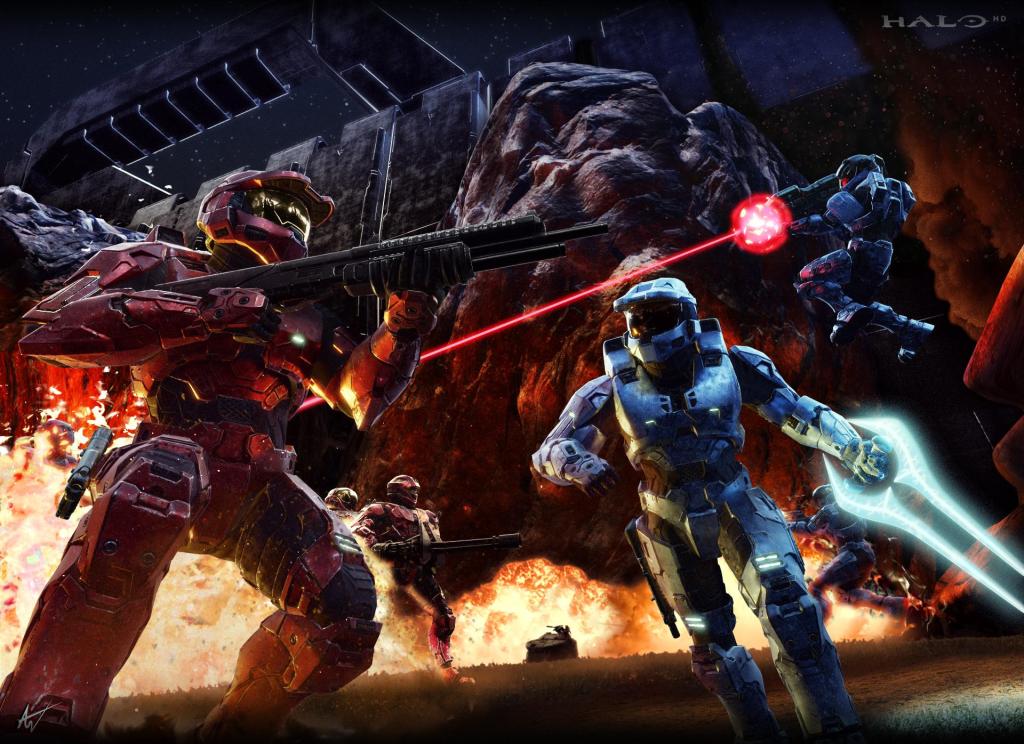
– Pillar 6: Fun –
It should go without saying, but fun should be at the heart of any game. Yet somehow, in today’s industry, that basic truth seems to be forgotten. Time and time again we’ve seen big-budget AAA titles fail spectacularly because they chased trends, metrics, and monetisation… not enjoyment. So while some people might say, “Well, I still find Halo fun, and I love the competitiveness of it,” that’s totally valid. There’s nothing wrong with that perspective.
But the issue isn’t whether competition exists, it’s about the mindset behind how that competition is built.
Back during the Bungie era, Halo was designed to be fun first. Everything else came after. Sure, it had competitive modes. It was a flagship title for Major League Gaming for years. But Bungie always made sure the game was enjoyable at its core, whether you were a casual player or someone sweating in ranked. This wasn’t just speculation; in their developer documentaries (Vidocs), Bungie repeatedly talked about how they’d playtest features over and over until they felt right. Weapons were fun to use. Movement felt intuitive. The game wanted you to enjoy it.
Then came 343 Industries.
With Halo 4, 5, and Infinite, the design philosophy changed. These weren’t games built for players, they were built for eSports. You saw it in the constant weapon tuning, in the endless tweaks to range, damage, and fire rate. Everything was adjusted to serve a competitive meta. MLG dropped Halo. And rather than take that as a sign, 343 just made their own Halo eSports scene, doubling down on their formula.
But designing around eSports isn’t the same as designing for fun. You might end up with something that looks exciting on a stage or livestream, but that doesn’t mean it holds up for the average player. And that’s where the problem lies: a game built for spectators isn’t always a game built for its community.
That shift in design split the fanbase. Suddenly, newer players were saying they didn’t like classic Halo. That it was too slow, too basic. Some even said it should never go back to the old style. Imagine if Call of Duty suddenly became a farming simulator and anyone who wanted the old version back was told to “just accept the change.” That’s how it felt for longtime Halo fans.
So when Halo Infinite was revealed, there was a flicker of hope. The art style looked closer to what we remembered. Gone were the prayers for no sprint or armor abilities, by this point, our expectations had shifted. All we wanted was for it to feel like Halo again. And in some ways, it did.
But that glimmer didn’t last.
Infinite might have looked like Halo, but it didn’t feel like it, at least not where it counted. It was a game built for monetisation. A live service. A product. Not a passion. It was designed not to thrill players, but to generate steady revenue for Microsoft. The soul wasn’t there anymore.
And here’s the thing, if they had built Infinite around being fun, if they’d given players something meaningful to work toward just by playing the game, people would have spent money in the shop. Happily, even. If the pricing was fair and the content felt like a reward instead of a ransom, the store could’ve been a bonus, not a bitter pill. But instead of earning cool armour through gameplay like in Halo 3 or Reach, we were given drip-fed cosmetics locked behind paywalls and battle passes, with the core experience stripped of purpose.
They didn’t lose the community because of microtransactions alone, they lost it because there was nothing worth staying for. No sense of progress, no real identity to build, no joy in simply playing the game. And when you take fun out of the equation, Halo stops being Halo.
So!
The pillar cracked in Halo 4.
It shattered in Halo 5.
And by Halo Infinite, it was ground to dust.

– The Ring Was Never Broken… We Were –
After reading through all of this, maybe you’re someone who already knew these things or maybe some of it offered a new perspective on what really happened over the years. Either way, what matters is this: with every pillar that broke, more people left Halo behind. They went off in search of new games, new communities, or anywhere they could recapture that feeling, that spark, Halo once gave them.
Some found it in games like Squad or Helldivers 2, where teamwork and camaraderie echo those old clan nights. Others, like myself, turned to Arma 3, where dedicated teams still craft rich Halo-themed mods that feel more like Halo than anything in Halo 5 or Infinite ever did. And then there’s XCOM 2, not even the same genre, but with the right mods, you can command a fireteam of marines from your favourite Halo era. When a soldier sprints into battle with a shotgun and a Bob Ross voice pack calmly says, “That alien was a happy little accident,” you can’t help but smile. It captures that magic, the weird, joyful chaos that defined Halo at its best.
Even Halo Wars 1 can be revived with mods that bring in new leaders, new visuals, and new strategies. And of course, there’s The Master Chief Collection, a love letter to the old games, kept alive through a thriving mod scene that delivers everything from serious overhauls to silly, whimsical fun.
The truth is, the mainline series may have failed its long-time fans. But Halo still lives, in its lore, in its mods, and in the people who refuse to forget what it once was. Some of us still hold onto hope. Not just that it’ll return, but that one day, Halo might once again stand tall, not by chasing trends, but by remembering what made it legendary in the first place.
Some of the Images used in this post were scoured from the artist Outlet
Check out his amazing work here on X https://x.com/OutletChief729
 The Last Transmission